“To look into the eye of a horse is to see a reflection of yourself that you might’ve forgotten. No grief was big enough not to be washed clean in your horse’s eye.”
― Gillian Mears

  • Grit

    What is Grit? The dictionary defines Grit as: courage and resolve; strength of character. Grit is a personality trait that involves sustained effort and passion toward a long-term goal, even when faced with obstacles. People with grit are able to persevere through challenges and setbacks.

    What are the top five characteristics of an individual with Grit?

    Perseverance: the ability to keep working toward a goal, even when faced with obstacles.

    Resilience: the ability to recover from difficulties and bounce back after setbacks.

    Passion: having a strong interest in and drive toward a goal.

    Conscientiousness: being careful, meticulous, and painstaking.

    Courage: having the strength to keep going, even when things get hard.

    Quite a few years ago, I went to a work conference in Las Vegas where I attended a luncheon with Angela Duckworth. I was unfamiliar with her before this event, but ever since I have been obsessed with her work with the U.S. Military Academy at West Point and her deep dive into studying and truly understanding Grit. She worked very closely with the Academy to understand if and how they could determine which factors predict success. Over time, she found that a cadet’s grit score, which measures their ability to persevere, was the best predictor of success during the summer training program, Beast Barracks.

    How is this all related to equestrians and the competitiveness in the Horse Show world? Grit is evident in equestrians who have a strong work ethic, determination, and the ability to dig deep to achieve their goals. Short term goals are healthy, but in this sport it is the perseverance to push year after year to those big long-term goals that will yield significant success.

    My daughter has been riding for about three and a half years now. To some that may not seem like a long time at all, but as I mentioned in an earlier post, my daughter shows up ready to ride at every single lesson, many days every week. There is no easy day… every day is a day worthy of no less than 100% effort even if some days feel like they fall short. She has ridden every type of horse imaginable, including ones who clearly did not particularly like their job or no longer had the desire/ability to perform. Many of those horses, unfortunately, are part of lesson programs where kiddos yank on their reins, kick them with unnecessarily aggressive spurs, or regularly give them smacks with a crop instead of a trainer correcting the rider for consistently utilizing the incorrect natural aids. When these horses are used for many different lessons with many different rider abilities, more times than not the lessons were quite a handful. My daughter ate dirt… a lot… the better she got at riding, the more difficult the given lesson horse would be.

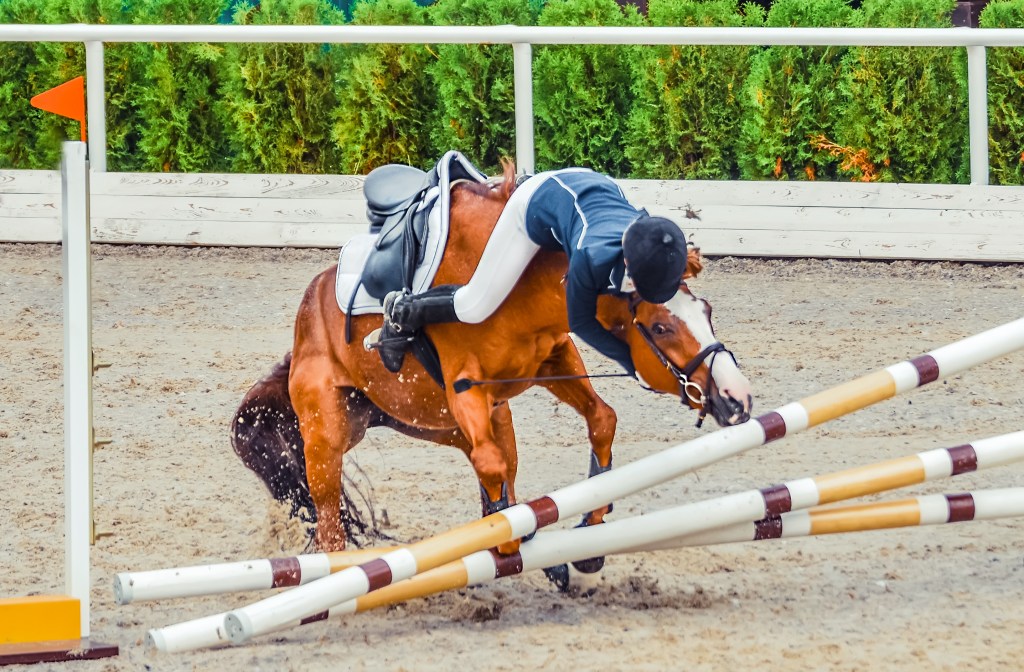
    I remember at one lesson in particular, my daughter and another rider were tacking up their horses together (they used to be friends, but that is for a different post… most likely while I am drinking a margarita or a glass of wine). The lesson that day was going to be in the outdoor arena, in light rain. The other girl was going to be on a horse that was notorious for dropping his head after jumps. She was anxious and dreading the lesson; so much so that she got extremely agitated and upset. Her mother complained to the trainer that her daughter did not want to ride that horse and instead of saying “Toughen Up, Buttercup”, she took the other rider off of her horse and told my daughter to do a pony swap and jump on the more difficult horse. I knew that there was a possibility that my daughter was going to be riding home in the car with me muddy and frustrated, but I also knew there was no chance my daughter was not going to accept the challenge. Fifteen minutes into the lesson, while the other girl was now enjoying her peaceful ride, my daughter had already eaten the dirt (and whatever else was in the footing) once, but the horse wasn’t done yet. She ate the dirt one more time and was also tossed sideways into the metal gate. She was filthy dirty, and by the third toss there were now tears running down her face and not so nice words coming out of her mouth… not due to any specific pain, but from disappointment. I distinctly remember the other rider’s mother coming up to me and apologizing saying “I’m sorry. That was not my intention”. I just looked at her and smiled saying “That’s OK… my daughter learned some valuable lessons today riding that horse. It may not be the easiest thing to watch as her mom, but she will be a better rider tomorrow because of it.” The very next day, my daughter received a call from her trainer… she had been moved up to the Advanced II riding group. Lesson learned. Be Gritty. People who value it will recognize the perseverance. They will recognize the resilience, passion, and courage it takes to keep getting back in that saddle – day after day, month after month, and year after year!

    My daughter is one of the grittiest riders I have ever watched in the saddle; she has been told that by many others as well. I know for certain, if she had the opportunity to ride that horse now, there’s not a chance it would happen again. This horseback riding, horse show thing is not for the faint of heart… It’s a marathon that continuously knocks you down and requires you to pick yourself up, dust yourself off, and jump right back in the saddle because no one is going to do it for you.

  • Horsemanship

    “One who believes that he has mastered the art of horsemanship has not yet begun to understand the horse.” – Unknown

    As we visited the barn more often, my daughter got significantly more comfortable with the attention to detail that was necessary to be more than just an average horsewoman and rider. She focused on the specifics, not just for her benefit, but also for whatever lesson horse she was riding that day. She had become much better at grooming – from picking hooves to brushing their coat. She spent a significant amount of time connecting with her lesson horses instead of just using them like an accessory of the day. I was very clear with her when she began riding – the effort you give to any one individual part of this sport is the same amount of effort you will give to all of it. Her effort was never forced, she loved every moment of her time with all of her horses – in or out of the saddle.

    We were never late to the barn – never. I don’t like being late anywhere, but especially when we go to the barn. I wanted to ingrain in her the need to never feel rushed. Showing up to the barn with only a few minutes to go grab your horse from their paddock or stall, groom them properly, and get them tacked up was never going to be done with one-hundred percent effort if it felt more like a chore than a bond being built with a horse. We always prioritized safety – for my daughter and the horse. She focused on staying calm any time she was around them, respecting their space while remembering their size, and avoiding anything that may startle them. Following this standard has significantly impacted her ability to ride well and have substantially more good rides – and any day she was stressed or upset her horse could tell and her ride would be average at best.

    Unfortunately, not all barns or equestrian facilities teach Horsemanship. They are not concerned with the well-being of the horse nor are they really focused on the well-being of the rider, they just kind of function with the mentality of the more “bodies” that come in for a lesson, the more money they will make. They don’t look into why the “naughty horse” is being naughty or why riders keep eating the dirt when they ride the young pony. We learned real Horsemanship on our own – up until we switched barns a little over a year ago. When we focus on practices like proper handling on the ground, regular grooming, proper saddle fit and girth tightness, we are able to focus on what is best for the horse and for the rider.

    When my daughter moved into her “advanced-level lessons” at our old barn she had a really close friend who always rode the same naughty pony. The pony mare had done big things at Pony finals years prior, but was now a handful for nearly anyone to ride. The pony had been put into lessons with riders who didn’t know how to ride well, didn’t understand how to properly use their aids, and had taught bad habits while letting the mare get away with things she shouldn’t have been able to. Aids, if used properly, can be extremely efficient; however, young riders weren’t being taught that communicating with your horse through the natural aids – seat, leg, and hands, comes first. Artificial aids – crop, whip, and spurs – should only assist your natural aids and should never be overused. However, we have seen it happen at least once at every horse show we have ever been to. A certain horse or pony clearly has something wrong or it is just not their day and yet the rider uses these artificial aids aggressively after the horse has already said enough. Why riders and their trainers refuse to listen, I will never understand.

    Listening to the horse should always come first. The first show my daughter went to with our new barn was on an extremely cold winter December day in Pennsylvania. It was windy and snowy; definitely not the most enjoyable for any horse, rider, parent, trainer, or groom there. The show day was long, but the early morning schooling seemed promising. It was a show our Mare had never been to with a new groom and a new trainer; we were the only people she knew well or felt she could really trust there. She did all of the things beautifully in the morning, but as the day got longer and longer she didn’t seem so sure of how this might go. My daughter entered the indoor arena for her first division at nearly eight o’clock in the evening – everyone was exhausted from waiting. Our mare told my daughter very quickly that today was not their day. My daughter asked nicely multiple times, adding leg and attempting to push her forward into the arena, but our mare politely told her “no” again. My daughter stroked her withers, told her it was “OK” and walked quietly out of the arena, still in the saddle, with tears running down her face. She was so disappointed. I was too, but I was also so proud of her in that moment. She respected her Mare and understood where the line was. She let her Mare know that she heard her and was not going to damage their bond.

    The horse show year prior, my daughter had won every ribbon imaginable with over twenty of them alone being the blue and over ten being champion. She didn’t need the ribbons to prove herself, the love and grace she showed her Mare in that moment will bring hundreds of blue and champion ribbons in the years to come. Many of the competitions since then have I watched adults in the arena who clearly need a lesson on horsemanship; I can proudly say my daughter could easily be the one to teach them a thing or two and even she has so much more to learn.

  • Connection

    I never grew up with horses. I never knew the kindness of their eyes or the welcoming neigh from a stall as I entered a barn. It took nearly four decades for me to realize what I was missing and how much I needed to find the place that soothed my soul. I found the potential of what that place could feel like in two thousand and twenty-one, on the twenty-seventh day of August.

    On that day, I walked into a large barn with dozens of horses not knowing the journey I was about to embark on. Looking back on it now, it was by no means the mesmerizing barn I now think of as my soul-soothing place, but in that moment it was the beginning of a new adventure.

    My daughter had been asking to start horseback riding for quite a while and the two years prior seemed more like a blur. Our family, like almost every other, was still focused on simply getting back into the swing of “life” post-pandemic. Life was as normal as one could expect, but we were eagerly awaiting the opportunity to experience new adventures and boy was this about to be one. My daughter and I had gone riding plenty of times before. We went riding up in the mountains of Western Maryland and down on the beaches of the Outer Banks in North Carolina, but this was different. This was the beginning of a significant change in our lives. What started off as one lesson a week on an up-hill, kick-ride, patience of a saint lesson horse has grown into a daily necessity for our hearts and minds. Horses connect with your soul in a way that words can barely describe and I began to truly understand that connection.

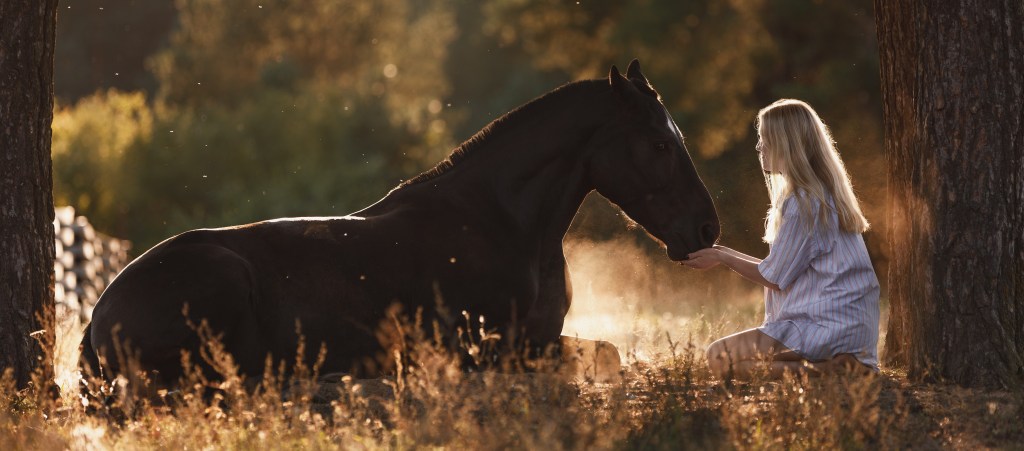
    It has been confirmed that horses connect with your soul. The equine heart rate frequencies synchronize with the human heart – the human heart rate following that of the horse – even when we simply sit in the horse’s presence. Horses want to enjoy the dance and respect their partner, but the horse will always love to lead. The bond between a horse and human is one that cannot be broken – their hearts speak louder than words ever could.